
Slow Burn
Smouldering slow minor blues in C — take your time and let every note cry.
Jam this track with live chords →A scale is a set of notes that sound good together — and on guitar, each one is a movable pattern you can slide into any key. This guide covers every scale a guitarist actually uses, from the first pentatonic box to the modes, each with note charts, fretboard diagrams, and a one-click way to practice it on an interactive fretboard or jam it over a real backing track.
Don't learn five scales badly — learn one well. The minor pentatonic is the easiest guitar scale that's also genuinely useful: five notes, one box shape, and every note sounds right over a minor-key jam. It's the backbone of blues, rock, and most guitar solos you've ever heard. When its five notes feel like home, add the blue note, then the major pentatonic for brighter songs. That order — not the major scale first — is how most working guitarists actually learned.
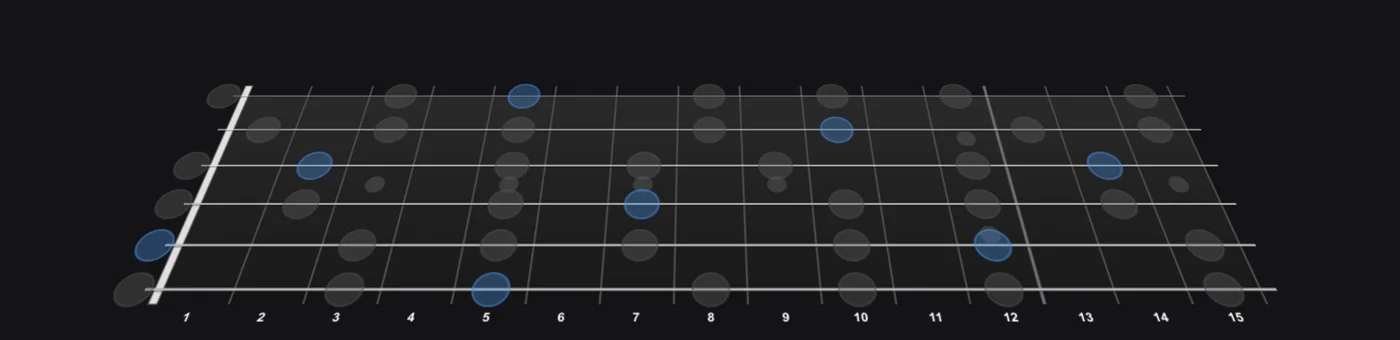
Practice this scale on the interactive fretboard — free →
Formulas and example notes (shown in C) for the twelve scales on this site. Every linked page has the full chart in all 12 keys plus fretboard diagrams.
| Scale | Formula | Notes in C |
|---|---|---|
| Minor Pentatonic | 1 · b3 · 4 · 5 · b7 | C, Eb, F, G, Bb |
| Major Pentatonic | 1 · 2 · 3 · 5 · 6 | C, D, E, G, A |
| Blues (minor) | 1 · b3 · 4 · b5 · 5 · b7 | C, Eb, F, Gb, G, Bb |
| Major (Ionian) | 1 · 2 · 3 · 4 · 5 · 6 · 7 | C, D, E, F, G, A, B |
| Natural Minor | 1 · 2 · b3 · 4 · 5 · b6 · b7 | C, D, Eb, F, G, Ab, Bb |
| Harmonic Minor | 1 · 2 · b3 · 4 · 5 · b6 · 7 | C, D, Eb, F, G, Ab, B |
| Melodic Minor | 1 · 2 · b3 · 4 · 5 · 6 · 7 | C, D, Eb, F, G, A, B |
| Dorian | 1 · 2 · b3 · 4 · 5 · 6 · b7 | C, D, Eb, F, G, A, Bb |
| Phrygian | 1 · b2 · b3 · 4 · 5 · b6 · b7 | C, Db, Eb, F, G, Ab, Bb |
| Lydian | 1 · 2 · 3 · #4 · 5 · 6 · 7 | C, D, E, F#, G, A, B |
| Mixolydian | 1 · 2 · 3 · 4 · 5 · 6 · b7 | C, D, E, F, G, A, Bb |
| Locrian | 1 · b2 · b3 · 4 · b5 · b6 · b7 | C, Db, Eb, F, Gb, Ab, Bb |
Looking for one key's notes, chords and positions? Each key page has the full scale on the neck, its chords, its relative key, and backing tracks recorded in that key.
Running boxes up and down builds finger memory but not music. What works: pick one position, play it slowly against a beat until you stop thinking about it, then immediately use it over a backing track — that last step is where scales turn into soloing. Jamistry's Scale Practice tool walks any scale position with a metronome on an interactive fretboard, and every backing track lights up the fitting scale on a live neck while the chords change.
These free tracks are built for scale practice — press play right here, or open them in JamLab to see the scale on a live fretboard as the chords move:
Smouldering slow minor blues in C — take your time and let every note cry.
Jam this track with live chords →
Swaggering blues shuffle in E — open position, wide-open jam.
Jam this track with live chords →Open Scale Practice — free, no signup →